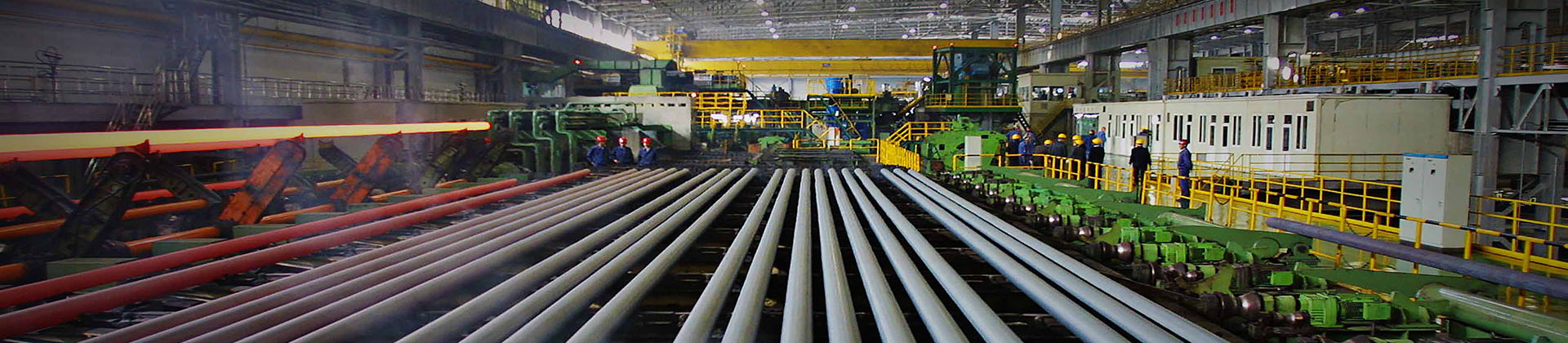
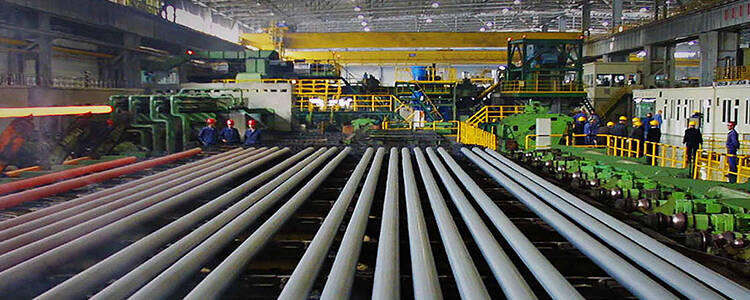
Spiral steel pipe(SSAW) is made by rolling low-carbon structural steel or low-alloy structural steel strip into a tube blank at a certain spiral angle (called forming angle), and then welding the tube seams. It can produce large-diameter steel pipes with narrower strip steel.
The production process of straight seam welded pipe (ERW/LSAW) is simple, with high production efficiency, low cost and rapid development. The strength of spiral-welded pipe is generally higher than that of straight-seam-welded pipe. It can produce welded pipes with larger diameters using narrower billets, and can also produce welded pipes with varying diameters using billets of the same width. However, compared with straight seam pipes of the same length, the weld length increases by 30~100%, and the production speed is lower. Therefore, most smaller-diameter welded pipes use straight seam welding, while large-diameter welded pipes mostly use spiral welding.
LSAW pipes have better performance than SSAW Pipes. The following points explain why.
SSAW pipes have greater residual stress than LSAW pipes. LSAW pipes pass through a uniform expansion process.
The SSAW pipe's weld stress concentration phenomenon is serious. The heat-affected zone of SSAW pipes is larger than that of LSAW pipes. Heat-affected zones are considered weak points where failure might start.
The geometry accuracy of LSAW pipes is better than that of SSAW pipes, a key to the ease of installation.
The welding line of LSAW pipe is around 60% lesser than that of SSAW pipes.
Using steel plates, the quality of LSAW pipe can be tested by non-destructive procedures. While SSAW pipes using hot-rolled coils should be tested with destructive methods, such as X-ray.
LSAW pipes adopt welding after the molding process, where various checks can take place. SSAW pipes employ molding and welding at the same time, but pre-checks are not being carried out.


